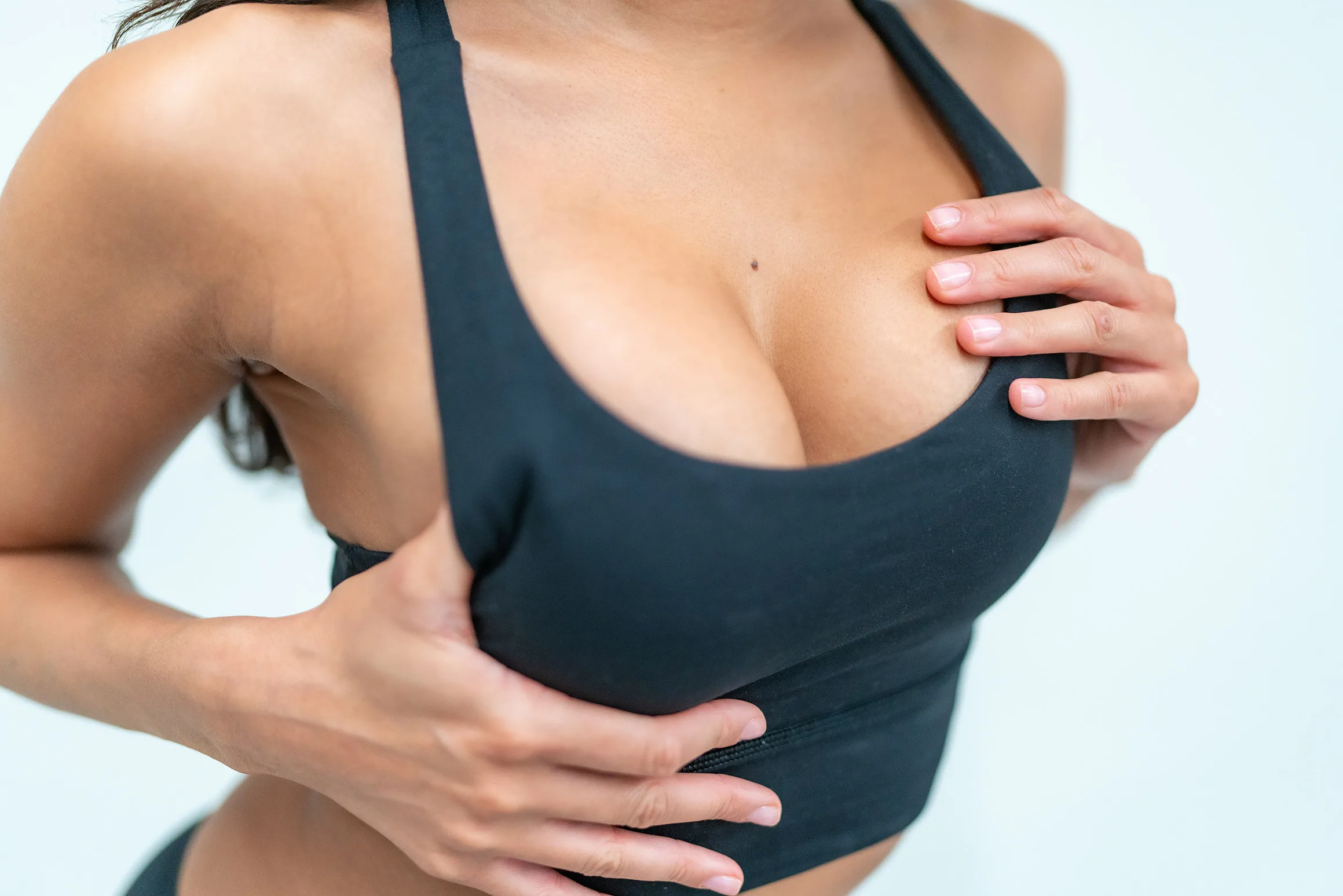
Breast augmentation with autologous fat transfer — also known as lipofilling — is an advanced and natural method of enhancing breast shape and volume using your own body’s fat. It is ideal for women who desire subtle, soft, and natural-looking results without the use of implants.

In this procedure, fat is gently harvested through liposuction from areas such as the abdomen, flanks, or thighs. The fat is then purified and artistically reinjected into the breasts to restore volume, improve contour, and correct minor asymmetries. The outcome is a beautifully refined and harmonious silhouette — naturally yours.

Procedure duration

2–3 hours


Anaesthesia

General


Pain/discomfort

Mild to moderate for 1–2 weeks


Wound healing

Approximately 2 weeks


Support garments

Surgical bra and liposuction garment for 6–8 weeks


Return to work

From 1-2 weeks


Sports & exercise

Gradually after 6–8 weeks


Final results

3 months – as swelling resolves and fat integrates


Scar maturation

6–12 months – minimal, fine incisions fade

Final Results

Results evolve gradually over 3 months, as swelling resolves and the transferred fat integrates with existing breast tissue. The final result feels soft, natural, and harmonious — enhancing both shape and proportion. Scars fade within 6–12 months, leaving only fine, barely visible marks.

The result is a quiet transformation: elegant, authentic, and entirely your own.

  • 1. Who It Is For?

    Fat transfer breast augmentation may be suitable for women who:

    • Desire a modest, natural enhancement of breast volume.
    • Prefer a procedure using their own tissue without implants.
    • Wish to correct mild asymmetry or irregularity in breast shape.
    • Are seeking contour improvement in both donor and breast areas.
    • Have sufficient fat available for liposuction harvest.
  • 2. What are the Advantages of Fat Transfer?

    Compared with implant-based augmentation, lipofilling offers several unique benefits:

    • Natural composition — uses your own tissue, avoiding foreign materials.
    • Soft, realistic results — fat feels and moves like natural breast tissue.
    • Minimal scarring — tiny incisions for liposuction and injection sites.
    • Dual benefit — improves contours of donor areas through liposuction.
    • Lower long-term maintenance — no risk of implant rupture or capsular contracture.

    The degree of augmentation is typically more modest than with implants, as part of the transferred fat is naturally reabsorbed by the body. Multiple sessions may be considered for patients seeking further enhancement.

  • 3. What is the Expected Recovery?

    Most patients experience mild swelling and bruising at both the liposuction and injection sites, which gradually settles over the first few weeks. The breasts may initially appear fuller due to swelling, before settling into their final contour.

    You’ll be advised to wear a supportive bra for comfort and to avoid pressure on the breasts for several weeks. Compression garments are also worn over liposuction areas to support healing and smooth contour.

  • 4. What are the Risks and Considerations?

    All surgical procedures carry some risks, which will be discussed in detail during consultation. In experienced hands, complications are rare. Possible risks of fat transfer include:

    Common risks:

    • Temporary swelling, bruising, or tenderness at donor and injection sites.
    • Uneven fat absorption or partial loss of volume.
    • Small contour irregularities or asymmetry.
    • Minor infection or oil cyst formation (rare).
    • Scarring — minimal due to tiny incision points.

    Rarer risks:

    • Fat necrosis — firm nodules due to fat cell loss; usually resolves or can be treated.
    • Microcalcifications — small deposits in the breast detectable on mammogram, distinguishable from other findings.
    • Fat embolism — extremely rare but serious; minimised by careful technique.

    Because no foreign material is used, there is no risk of capsular contracture, rupture, or implant-related conditions such as BIA-ALCL, BIA-SCC, or BII.

  • 5. When can I return to work or training?
    • For desk-based work, most patients are able to return after 1–2 weeks, provided they are comfortable and able to move freely.
    • For more physically demanding roles—especially those involving lifting, pushing or repetitive upper-body movements—the typical return timeframe is 2–4 weeks, depending on the job demands.

    If you like, I can draft a version of this section specifically for athletes (by sport type) that you can include in your website.

  • 6. Will I need lymphatic massage or special aftercare?

    Most patients recover well with supportive bras, simple pain relief, and gradual return to movement. If swelling or tightness persists, targeted massage or physiotherapy may be recommended on an individual basis.

  • 7. When can I drive or fly?

    You can drive once you feel able to comfortably and safely control the vehicle in all directions and perform an emergency stop. For most patients, this is around 2 weeks after surgery.

    Flying is generally avoided for the first 4 weeks because of the effects of general anaesthetic, changes in cabin pressure, and the increased risk of swelling or discomfort during recovery. It’s best to discuss any planned travel with me during your consultation so we can tailor advice to your procedure and healing.

  • 8. When can I exercise again?
    • Gentle walking: immediately
    • Light cardio: from 3 weeks
    • Lower-body training: from 4 weeks if it doesn’t strain your chest
    • Upper-body workouts: usually after 8 weeks
    • High-impact or weight training: after 8–12 weeks, depending on the placement and your individual healing.

    Your aftercare plan will be tailored to your activity level and implant type.

Doctify - Great Patient Experience

Schedule a consultation

Contact us