Over the months following surgery, the breasts gently settle into their new shape as the tissues soften and any swelling fades. The lower pole becomes rounder and fuller, the areola sits in a more natural position, and the overall breast contour appears balanced, feminine, and harmonious. Scars soften gradually, blending quietly into the surrounding skin.
Breast
Tuberous Breast Surgery
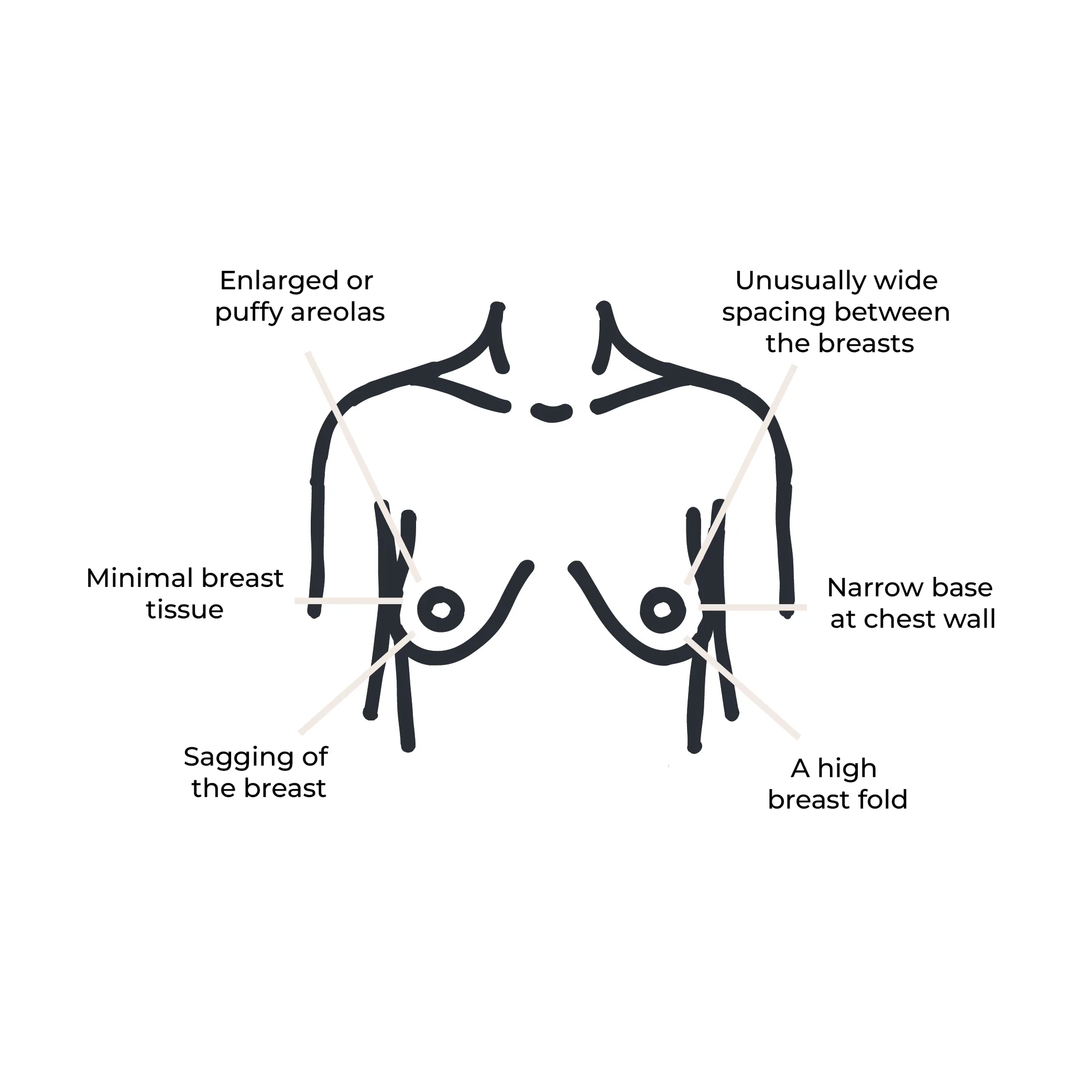
Tuberous — or tubular — breasts are a naturally occurring variation in breast development. They arise when the breast tissue does not fully expand during puberty, leading to a narrow breast base, a prominent or enlarged areola, and a breast shape that may appear high-set, conical, constricted, or asymmetric. Although common, this difference in shape can influence confidence, clothing choices, and how the breasts feel in proportion to the rest of the body.
A tuberous breast correction reshapes the breast from the foundation outward. The procedure involves releasing the constricted lower pole, reshaping and repositioning the areola, and — when needed — enhancing volume through fat transfer or breast implants. The goal is to restore a rounder, softer, and more balanced breast shape, achieving results that feel natural and beautifully aligned with your figure.
During your consultation, I use advanced 3D breast simulation technology to help you visualise potential outcomes. This allows us to explore different techniques — including shaping, lifting, and volume enhancement — and understand how each could complement your proportions. Together, we plan your surgery with clarity, precision, and confidence.
Every woman’s anatomy and experience with tuberous breast shape is unique. I take time to listen deeply to your goals and craft a bespoke surgical plan tailored to the degree of constriction, your breast footprint, your ideal aesthetic, and your own sense of femininity and balance.

Procedure time
2 to 3 hours

Anaesthetic
General (day surgery)

Discomfort
Mild to moderate for 1–2 weeks

Healing time
Around 2–3 weeks

Support bra
Worn for 3 months
Back to work
From 2 weeks

Exercise
Gradually after 8 weeks

Final results
3–6 months as swelling settles
Scars fade
Scars fade
Final results
For many women, the transformation extends beyond the physical. Tuberous breast surgery often brings a renewed sense of ease, freedom, and self-assurance — the feeling of finally seeing your body reflect your inner self. This procedure is thoughtful, precise, and deeply personal. My approach is gentle and individual, focusing on reshaping the breast in a way that feels effortless, natural, and softly empowering, restoring not only form but confidence.
FAQs
Find more here-
1. Who it is for?
Tuberous breast surgery may be right for you if you:
- Have breasts that appear narrow, conical, or uneven
- Notice enlarged or stretched areolas
- Feel self-conscious about breast shape or projection
- Would like a more balanced and rounded appearance
- Are in good overall health and seeking natural, long-lasting results
-
2. What are the Benefits?
- Creates a rounder, more natural shape
- Improves symmetry and proportion
- Softens and reshapes the breast base
- Refines the areola for a balanced look
- Enhances comfort and confidence in clothing
-
3. What are the Recovery like?
Mild swelling, tightness, and sensitivity are common in the first two weeks and improve as healing progresses. A soft support bra should be worn for three months to help maintain the new shape. Most women return to work after about two weeks and resume gentle activity after six to eight weeks.
The final shape continues to refine over several months, settling into a smooth, natural contour.
-
4. What are the Risks and considerations?
All surgery carries some risks, which will be discussed in detail during your consultation. Possible risks include temporary swelling or bruising, mild differences in shape or sensation, and small areas of delayed healing.
If an implant or fat transfer is used, there are additional risks such as uneven absorption or rare implant-related complications. However, serious problems are uncommon, and every precaution is taken to ensure safety and a smooth recovery.
-
5. When can I return to work or training?
- For desk-based work, most patients are able to return after 1–2 weeks, provided they are comfortable and able to move freely.
- For more physically demanding roles—especially those involving lifting, pushing or repetitive upper-body movements—the typical return timeframe is 2–4 weeks, depending on the job demands.
If you like, I can draft a version of this section specifically for athletes (by sport type) that you can include in your website.
-
6. Will I need lymphatic massage or special aftercare?
Most patients recover well with supportive bras, simple pain relief, and gradual return to movement. If swelling or tightness persists, targeted massage or physiotherapy may be recommended on an individual basis.
-
7. When can I drive or fly?
You can drive once you feel able to comfortably and safely control the vehicle in all directions and perform an emergency stop. For most patients, this is around 2 weeks after surgery.
Flying is generally avoided for the first 4 weeks because of the effects of general anaesthetic, changes in cabin pressure, and the increased risk of swelling or discomfort during recovery. It’s best to discuss any planned travel with me during your consultation so we can tailor advice to your procedure and healing.
-
8. When can I exercise again?
- Gentle walking: immediately
- Light cardio: from 3 weeks
- Lower-body training: from 4 weeks if it doesn’t strain your chest
- Upper-body workouts: usually after 8 weeks
- High-impact or weight training: after 8–12 weeks, depending on the placement and your individual healing.
Your aftercare plan will be tailored to your activity level and implant type.